Blast Freezer for Fruits and Vegetables: TunelGroup’s Solutions for Controlled Rapid Freezing
Blast Freezer for Fruits and Vegetables solutions use refrigerated airflow to freeze prepared produce under controlled conditions. TunelGroup develops project-specific rooms that combine refrigeration, insulated construction, loading arrangements and product temperature monitoring for processors, packing facilities and exporters.
The design starts with the crop, preparation method and required finished format. Whole berries, cut fruit, vegetable florets and packed portions need different operating specifications. Define the incoming temperature, piece dimensions, packaging, batch weight and intended use before selecting the equipment.
Why Is Blast Freezing Important for Fruits and Vegetables?
A planned freezing operation helps processors connect seasonal production with frozen distribution and later use. Commercial acceptance depends on the product’s appearance, texture and performance after the customer’s intended preparation method.
A blast freezer for fruits and vegetables coordinates four practical requirements:
- Suitable incoming produce: specify variety, maturity, condition and preparation before loading.
- Repeatable presentation: define piece sizes, tray layers and packaging for each product.
- Measured freezing performance: verify product temperatures within representative loaded arrangements.
- Clear quality targets: agree acceptable colour, texture, liquid release and piece separation.
Assess finished samples using the intended cooking, thawing or further-processing route. A product intended for a fruit filling may have different acceptance criteria from one sold as separate dessert pieces.
TunelGroup’s Tailored Blast Freezer Solutions for Fruits and Vegetables
Each crop and presentation should have its own specification. The following table identifies requirements to resolve during project development and product trials.
| Application or Requirement | Project-Specific Solution |
|---|---|
| Whole Berries | Define size range, maturity, handling method and required separation; assess breakage and appearance after the intended use. |
| Mango Cubes and Fruit Slices | Specify cut dimensions, preparation, surface-water removal and packaging, with firmness and liquid release included in quality checks. |
| Peas and Sweetcorn | Evaluate preparation, product layer depth, tray retention and the required proportion of separate frozen pieces. |
| Broccoli and Cauliflower | Control floret dimensions and maximum stem thickness; validate preparation and freezing for the agreed size range. |
| Mixed Vegetables | Define each component’s treatment requirements and agree whether preparation and freezing occur separately before blending. |
| Vegetable Pretreatment | Where blanching is required, validate the treatment, subsequent cooling and drainage for the vegetable and cut size. |
| Quick-Freezing Endpoint | Codex specifies −18°C or colder at the thermal centre after temperature stabilization. This product endpoint is distinct from the freezer air temperature. |
| Separate-Piece or Block Format | State the required final presentation. A batch room needs product trials to demonstrate any specified free-flowing or IQF result. |
| Capacity and Cycle Time | Specify net kilograms per batch and daily output for agreed entry temperatures, piece sizes, tray arrangements and packaging. |
Technical references: Codex CXC 8-1976 and FAO — Processing Selected Frozen Fruit and Vegetable Products. Air settings and cycle duration must be established for the actual product and load.
Key Features of TunelGroup’s Fruit and Vegetable Blast Freezers
- Custom room layout: trolley dimensions, loading lanes and door positions coordinated with preparation and packing.
- Insulated construction: walls, ceiling, floor and door details selected for the operating duty and external conditions.
- Application-specific refrigeration: equipment evaluated for product heat removal, container loads and room heat gains.
- Engineered air distribution: evaporators, supply passages and baffles arranged around the approved load.
- Monitoring and control: product probes, room sensors, cycle records and alarms included according to the agreed scope.
- Accessible construction: cleanable surfaces, service clearances and protected drainage considered during design.
How TunelGroup Improves Fruit and Vegetable Freezing Consistency
Project development connects the equipment specification with a documented preparation and loading method. The review should establish:
- Preparation controls: sorting, washing, cutting, any pretreatment and the condition of produce entering the room.
- Loading instructions: agreed layer depths, tray gaps, rack positions and clear return-air routes.
- Packaging sequence: whether produce is frozen in its final pack or packed after freezing, with the selected arrangement used in trials.
- Acceptance checks: product temperatures, separation, handling damage and quality after the intended preparation method.
Blanching can control enzymes associated with quality changes in many vegetables. Treatment and subsequent cooling must suit the product; excessive treatment can soften the tissue. University of Minnesota Extension explains these principles; its domestic processing times should not be treated as industrial production settings.
IQF means individually quick frozen. FAO describes fluidized-bed equipment as a form of air-blast freezing that supports separate-piece production. For a tray-based project, establish measurable separation criteria and confirm them with the actual product. See FAO’s overview of freezing methods.
Visual Highlights: TunelGroup’s Fruit and Vegetable Blast Freezer
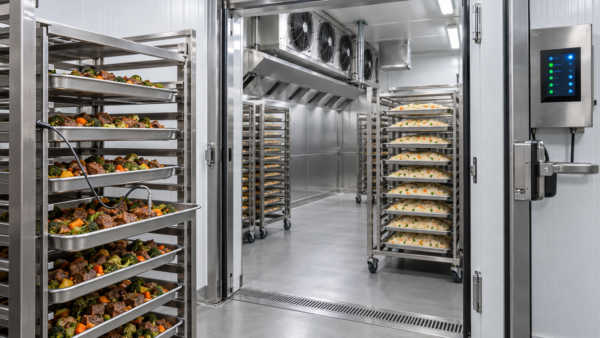
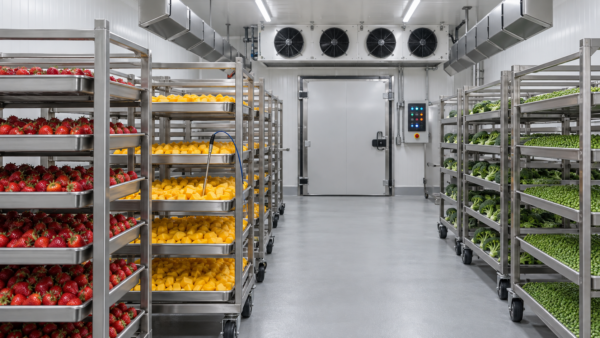
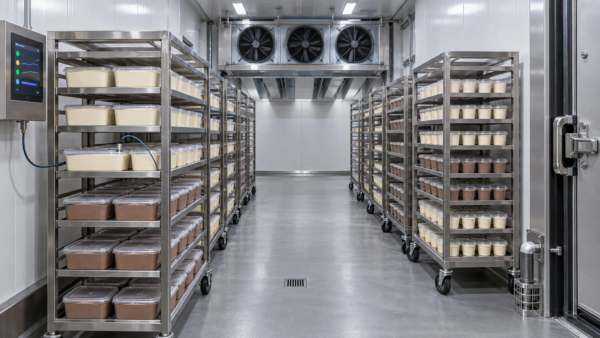
The illustration presents organized produce loading, industrial evaporators and a designated temperature-monitoring sample.
Dedicated Product Arrangements
Strawberries, mango pieces, broccoli and peas appear on separate racks. Each product requires its own preparation, load limit and cycle specification; the illustration does not establish one shared process.
Refrigeration and Insulated Envelope
Evaporators, air passages and a low-temperature door are coordinated with the room envelope. Equipment capacity and insulation thickness follow the project calculation.
Product Temperature Monitoring
A probe in a designated fruit sample provides product-level information. Sensor size and placement should suit the piece being measured, with monitoring locations established during loaded trials.
Illustrative image. Final equipment, product layers, rack positions and room dimensions depend on the approved project.
Benefits of Choosing TunelGroup for Fruit and Vegetable Blast Freezing
- Product-focused configuration: equipment evaluated around the crops and formats your facility handles.
- Clear capacity targets: defined batch conditions provide a basis for seasonal production planning.
- Repeatable operation: documented loading patterns help operators follow the agreed method.
- Energy planning: insulation, door use, fan duty and defrost reviewed together.
- Batch visibility: monitoring options can associate temperature records with production lots.
- Facility integration: room planning connects preparation, freezing, packing and frozen storage.
Why Choose TunelGroup for Your Produce Freezing Project?
TunelGroup brings insulated construction, refrigeration and controls into one engineering discussion. The aim is to align the proposal with your product range, available space and production requirements.
- Application review: produce condition, dimensions, packaging and entry temperature assessed before selection.
- Coordinated components: panels, doors, evaporators and refrigeration considered as one system.
- Project-based layout: loading routes and service access developed around the intended operation.
- Defined supply scope: equipment, transport, installation and commissioning responsibilities clarified in the quotation.
- Technical documentation: project information and operating guidance provided according to the agreed scope.
- Maintenance planning: component access considered alongside cleaning and production schedules.
Additional Benefits of TunelGroup Blast Freezers
- Seasonal flexibility: additional crops and package formats can be assessed with separate operating specifications.
- Remote visibility: data logging and alarm functions can be included when specified.
- Process coordination: loading and cleaning plans can support controlled movement between preparation and packing areas.
Conclusion
A blast freezer for fruits and vegetables should be specified around the produce, preparation method, piece size, packaging and required output. Measured product temperatures and agreed quality criteria provide a practical basis for commissioning and daily operation.
Freezing does not sterilize produce or automatically make it ready to eat. Establish handling, storage and final-use instructions for the actual product. Explore our fruit and vegetable blast freezing guide for more information about quality, texture and packaging.
Price
The price of a blast freezer for fruits and vegetables depends on room dimensions, product format, batch capacity, entry temperature, cycle requirements, insulation, refrigeration, controls and installation scope.
For a project-specific quotation, provide the location, crop list, preparation methods, piece dimensions, packaging, required separation, seasonal output and electrical supply. Contact TunelGroup to discuss the required configuration.